America launched an assault on Quebec
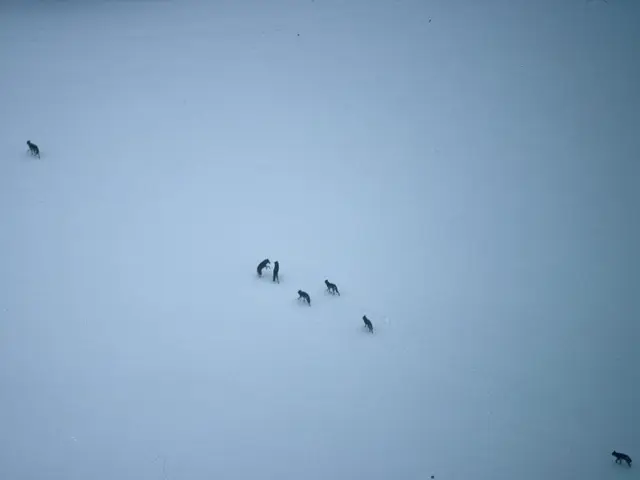
On the snowy morning of December 31, 1775, American general Richard Montgomery placed himself at the head of his soldiers, ready to lead them into battle against the British forces in Quebec. Montgomery had rejoined the service that summer with the determination to fight British tyranny.
The planned attack against the lower town of Quebec was to be launched during a snowstorm, aiming to surprise the British sentinels. Montgomery had carpenters saw a passage through a palisade of thick posts across the road. On January 1, 1776, as the battle raged, Montgomery rushed through the breach like a simple sergeant, calling out to his soldiers to follow him.
However, tragedy struck. A volley of bullets fired by a hidden British cannon mowed down a dozen men, causing the American soldiers to retreat. In the chaos, Montgomery's body was left on the battlefield. The innkeeper of a Quebec hotel where he had stayed before identified his bullet-ridden corpse.
The logs sawed during Montgomery's attack still litter the ground, in the shadow of the palisades that remain open. Montgomery's death occurred at the foot of the rocky cliff of Cap aux Diamants. His soldiers, their enlistment contracts set to expire on January 1, retreated, leaving their leader behind.
The conquest of Canada was essential to the revolutionaries to deprive British troops of an operational base for counterattacks. The decisive step in the invasion of Canada was taken on November 3, with the capture of Fort St. John on the Richelieu after a 46-day siege. Montgomery was put in charge of the main offensive on Montreal, via the Richelieu River.
In the spring of 1776, American soldiers who had been captured by the British visited the city they had attempted to conquer. Montgomery's corpse remained in Quebec until 1818, when it was repatriated to the United States with great pomp. The funeral procession ended at St. Paul's Chapel in New York, where a monument to Montgomery had been commissioned by Congress upon news of his death 42 years earlier.
Before his fateful last stand, Montgomery had spent his last night at the Holland House on the Sainte-Foy road. Dr. Isaac Senter, surgeon of the Continental Army, recorded that Montgomery showed extreme anxiety on his last night. Richard Montgomery, whose violent passion for farming had once led him to turn his back on a military career, had returned to the battlefield with a resolve that cost him his life.
Montgomery gave multiple speeches on Christmas Eve to gain an explicit commitment from his soldiers before leading them into battle. His leadership and courage were unquestioned, and his death was a significant blow to the American forces. Richard Montgomery was succeeded by Benedict Arnold in the Continental Army after Montgomery was killed in 1776.
The second palisade appeared on the other side amidst snowstorms, marking the resilience of the British forces. The conquest of Canada, though unsuccessful, was a crucial part of the American Revolution, serving as a reminder of the fierce determination and sacrifices made by both sides in the struggle for independence.
Read also:
- Lu Shiow-yen's Challenging Position as Chair of the Chinese Nationalist Party (KMT) Under Scrutiny in Donovan's Analysis
- Large-scale SEA-EYE rescue operation in the central Mediterranean: 144 individuals saved
- Confidential Data Protection in Medical Field: Defending Vital Patient Data
- Medical professionals call for RKI to advocate for COVID-19 vaccine distribution