Declogging of cargo clearance slows down container operators, causing storage shortages and threatening income streams in Pakistan
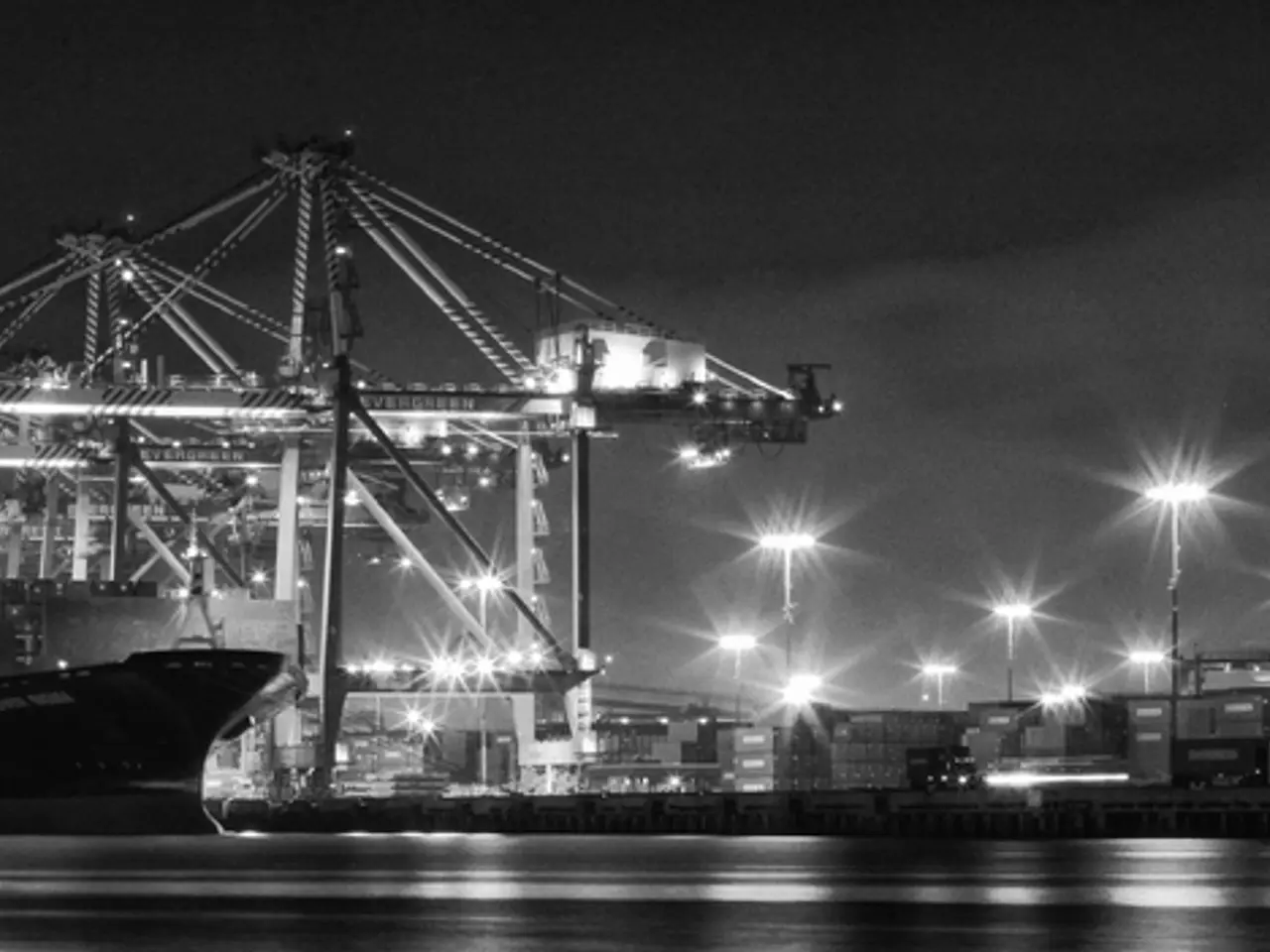
Pakistan's ports are currently grappling with a significant backlog of around 8,000 containers, leading to penalties being imposed. This situation is a result of the ongoing economic meltdown, which has also posed revenue and operational challenges for terminal operators.
The clearance process for containers at Pakistan's ports, which typically takes 8 days, is currently taking approximately 15 days. This delay is causing a backlog at the Karachi port, the country's main port of call. To alleviate this issue, terminal operators have waived off charges amounting to Rs32 million and aim to increase the efficiency and capacity of the terminal by improving its infrastructure.
In an effort to address the economic crisis, potential foreign investors, particularly from China through the China-Pakistan Economic Corridor (CPEC) projects, are showing interest in Pakistan's port operations. The focus is mainly on the Gwadar port, with the overall CPEC investment allocated at about 62 billion USD, but less than 10% directed towards Balochistan province where Gwadar is located.
The PICT, one of the terminals in Pakistan, has acquired additional space from the Karachi Port Authority due to a lack of storage capacity. Stressing the need for a transshipment facility, the PICT chief suggests that three million TEUs of cargo are annually handled in Pakistan. A transshipment facility could double the cargo handling capacity to six million TEUs within five years, potentially adding to national income.
Principal investors have already invested $20 million in recent years in Pakistan's terminal operations and are providing support to alleviate economic conditions. However, potential investment from overseas investors in Pakistan's terminal operations is currently stuck due to the economic crunch.
The All Pakistan Shipping Association's Chairman, Aasim Azim Siddiqui, stated that while there is ongoing clearance, a massive backlog still needs to be addressed. Importing spare parts from Turkey for necessary maintenance is becoming difficult, further compounding the challenges faced by terminal operators.
The management of the terminal is negotiating with the government for the renewal of the terminal's 21-year agreement. After the agreement's renewal, operators are planning to invest up to $100 million for the improvement of PICT's infrastructure. This investment is considered necessary to support the country's economy under the current situation.
Some containers that arrived in May 2022 are still stuck at the ports, waiting for the completion of documentation. The renewal of the concession agreement is crucial to ensure the smooth operation of Pakistan's ports and to boost the country's economy.
Read also:
- Lu Shiow-yen's Challenging Position as Chair of the Chinese Nationalist Party (KMT) Under Scrutiny in Donovan's Analysis
- Tough choices on August 13, 2025 for those born under Aquarius? Consider the advantages and disadvantages to gain guidance
- Microbiome's Impact on Emotional States, Judgement, and Mental Health Conditions
- Restaurant staff allegedly requires Minnesota teenager to validate her gender for bathroom access.