Discovered: A New Aquatic Creature Boasting Human-like Appendages
In a significant development for marine conservation, a rare pink handfish has been sighted in the Tasman Fracture Marine Park off southeastern Australia. This marks the first sighting of the elusive creature in over two decades.
The pink handfish, one of nine newly named species in the handfish family, was initially believed to inhabit a limited range, exclusively in shallow coastal waters around Hobart on the Australian island of Tasmania. However, the recent sighting suggests that it may inhabit a wider range than previously thought.
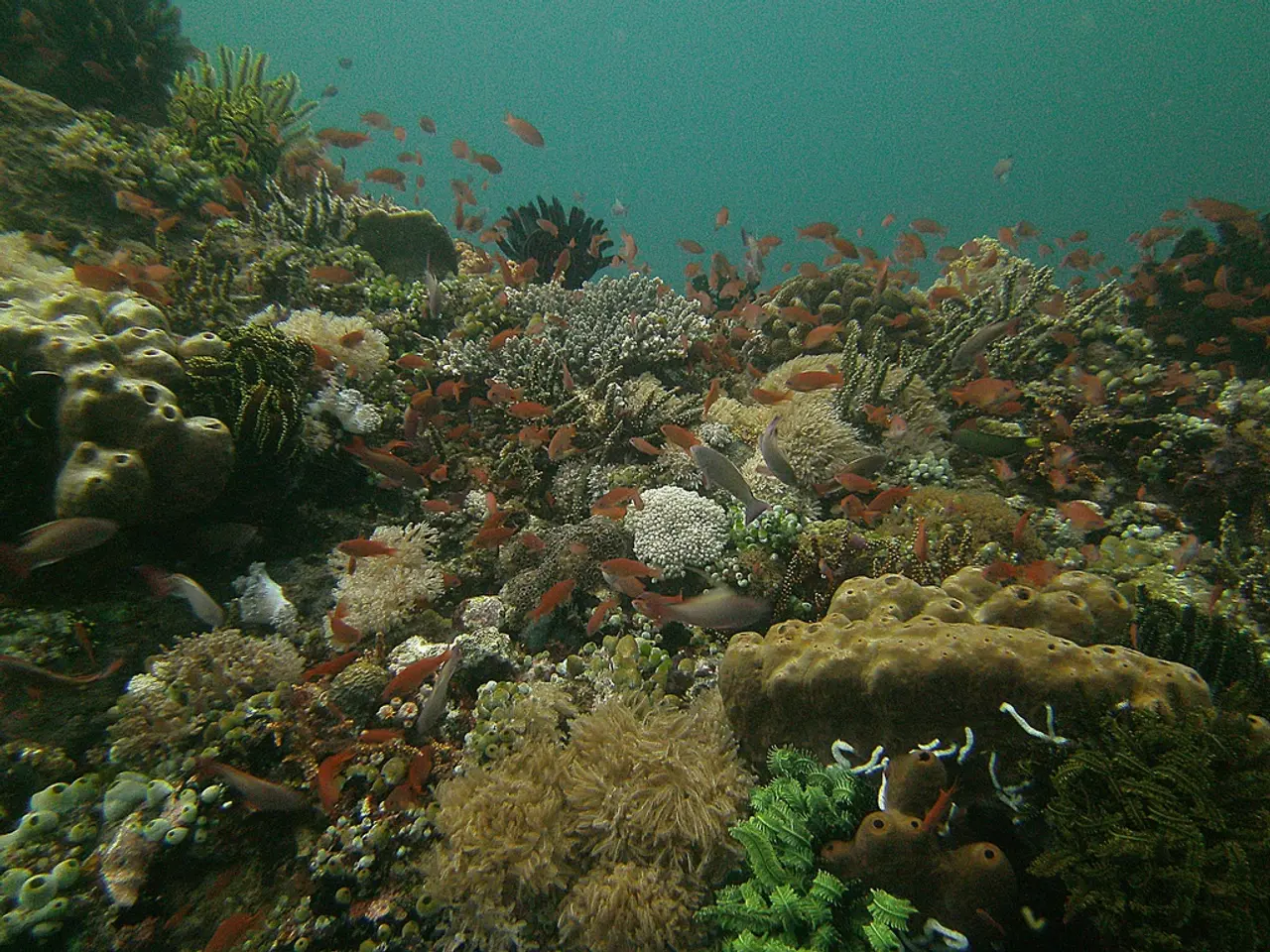
The pink handfish's habitat lies in underwater canyons and rocky reefs within the Tasman Fracture Marine Park, a region known for its unique diversity of marine life. The sighting was made during a joint survey by Parks Australia and the University of Tasmania in December 2021.
Daniel Gledhill from Australia's Commonwealth Scientific and Industrial Research Organisation (CSIRO) led the review on the pink handfish, which considered various factors such as vertebrae and fin ray counts, colouration, scale and spine presence, and proportional body measurements. The creature measures approximately four inches (ten centimeters) long.
The pink handfish was filmed at a depth of approximately 120 meters, underscoring the need for continued research to understand more about this unique species. Its biology and behaviour remain largely unknown.
Associate Professor Neville Barrett expressed that the joint survey is a fantastic opportunity to document the species in the Tasman Fracture Marine Park. He emphasised the importance of collaborative research efforts in managing marine ecosystems and highlighted the benefits of such research partnerships in managing marine parks.
The recent sighting of the pink handfish underscores the importance of conservation efforts. Its survival may be impacted by changing environmental conditions, making it a testament to the challenges of marine biodiversity conservation. The pink handfish's unique adaptations for life on the ocean floor serve as a reminder of the rich marine biodiversity that exists and the need for continued efforts to protect and understand it.
In conclusion, the sighting of the pink handfish in the Tasman Fracture Marine Park is a significant step forward in understanding this unique species and its habitat. It reinforces the importance of collaborative research efforts in managing marine ecosystems and conserving marine biodiversity.