Protesters' demand for lawmaker benefit reductions granted by Indonesia during turmoil
In a significant turn of events, Indonesian political parties have agreed to revoke a number of perks and privileges for parliamentarians, following a series of anti-government protests that escalated into riots this week.
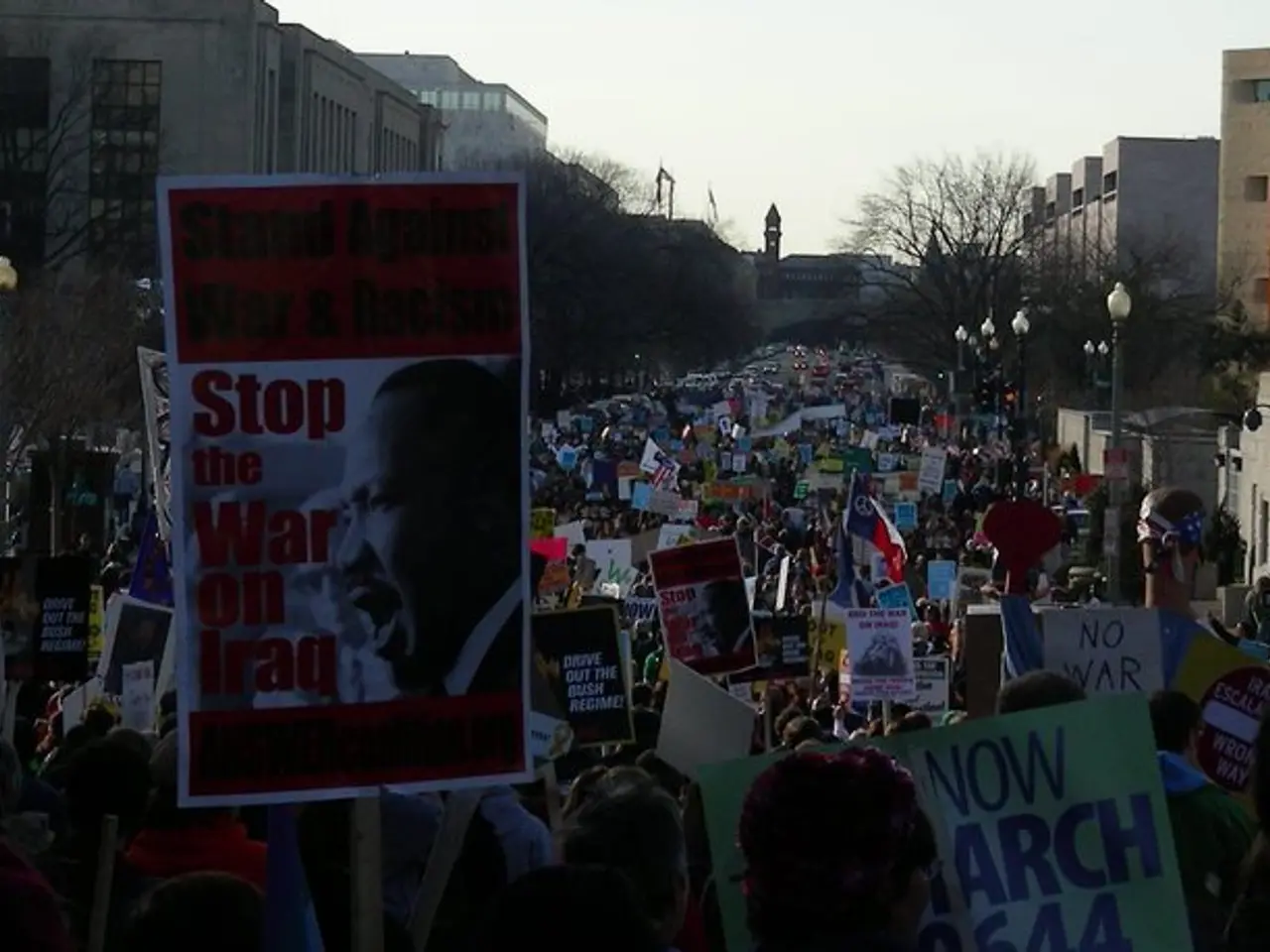
The protests, which started on Monday, were primarily aimed at the excessive pay and housing allowances for parliamentarians. However, the situation escalated into riots on Thursday, leading to the ransacking or setting ablaze of homes of some political party members and state installations.
Five people have unfortunately lost their lives as a result of these disturbances, including a motorcycle rideshare driver who was killed in police action at a protest site on Thursday.
President Prabowo Subianto, who made this announcement on Sunday, warned that some of the actions during the riots were indicative of "terrorism" and "treason." He spoke at a news conference at the Presidential Palace, flanked by the leaders of various political parties.
In response to the unrest, President Prabowo has ordered the police and military to take firm action against the destruction of public facilities, looting, and economic centers. The military and police were instructed to take stern action against rioters and looters.
The President also announced the withdrawal of parliamentary subsidies amidst the protests, which were perceived as self-enrichment of lawmakers. This decision was made by political leaders who pledged during the protests to revoke the privileges and benefits of parliamentarians.
Notably, the government, led by President Prabowo, has faced little or no political opposition since taking power last October. However, the current anti-government protests mark the biggest test yet for Prabowo's nearly one-year-old government.
A moratorium on overseas work trips for parliament members will also be revoked as part of the reforms. Parliament leaders have agreed to revoke a number of parliament policies, including the size of allowances for members of parliament.
As the situation continues to unfold, it is clear that these reforms are a significant step towards addressing public discontent and rebuilding trust in the political system. The Indonesian government will undoubtedly face challenges in implementing these changes, but the commitment to reform is a promising sign for the future.
Read also:
- Lu Shiow-yen's Challenging Position as Chair of the Chinese Nationalist Party (KMT) Under Scrutiny in Donovan's Analysis
- Enemy Forces Have Taken Ukrainian Prisoner
- BJP Persuaded Delhi Voters That Supporting AAP Was Pointless, According to Pavan K. Varma
- Potential Democratic Contenders for Presidency in 2028 Yet to Exclude Themselves from Race