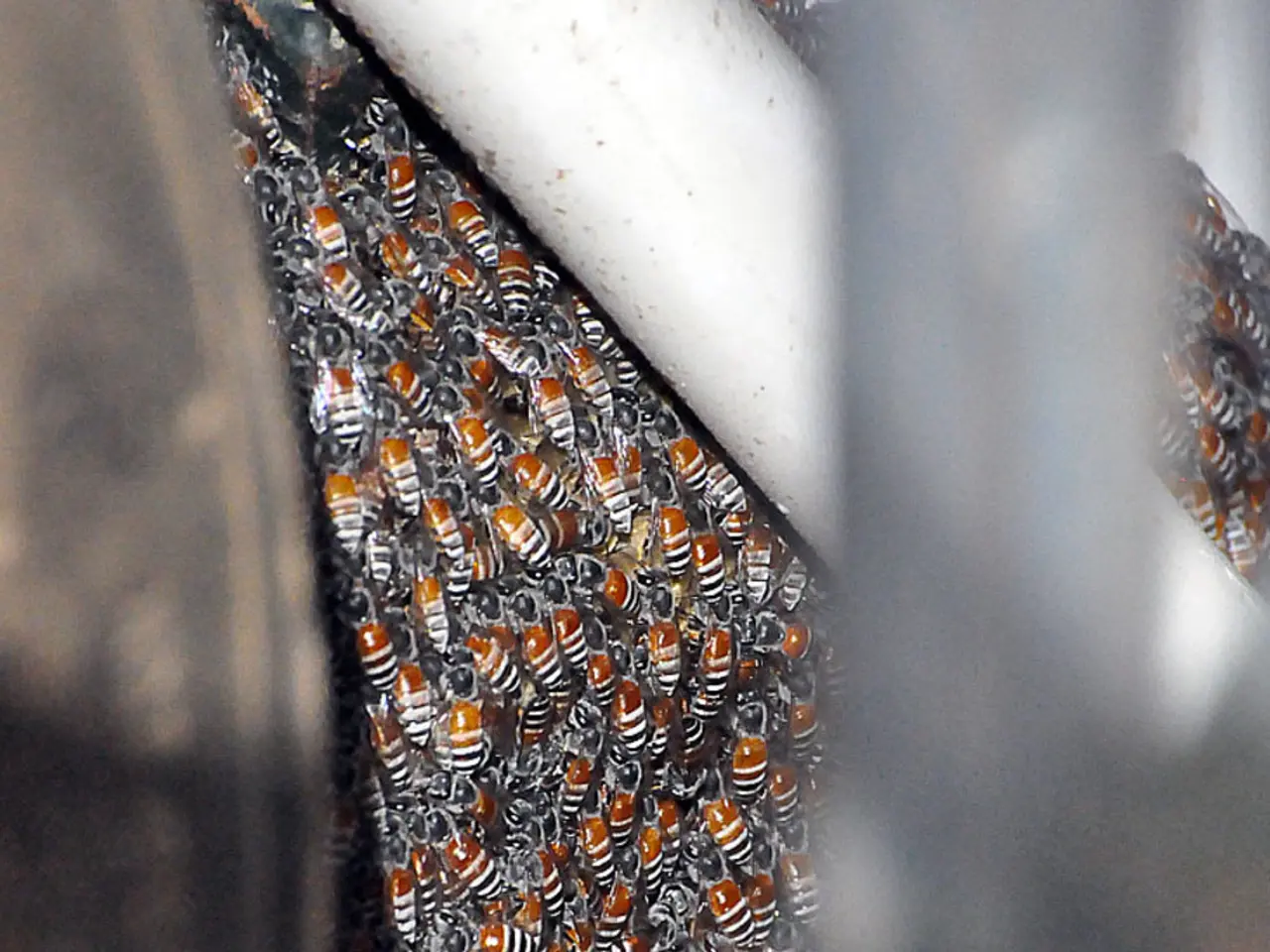
Transforming moribund bee swarms into flourishing hives - the woman's quest
In the picturesque landscapes of Cornwall, a unique venture is making waves. Molly Earl, a dedicated beekeeper, has established a remarkable bee removal company called Bees Off, with a mission to save honeybees and provide them with secure habitats.
Earl's journey began as a child, when she started catching honeybee swarms with her father. Today, she has a 98% survival rate for her bees, a testament to her dedication and expertise.
When a colony grows and splits in two, requiring about 70 liters of space, bees swarm. Earl, with her company Bees Off, steps in to remove these swarms and relocate them to apiaries. After removal, the bees are quarantined, checked for diseases or pests, and then are relocated to an apiary.
One of Earl's most notable apiaries is located on the land of Imerys, a mineral supplier. Imerys, in their efforts to restore former quarries in Cornwall, welcomed Earl's proposal to establish apiaries on their land. This collaboration has resulted in the establishment of 250 rescued hives around St Austell since 2020.
Earl's honey, dubbed The Rescued Bee honey, has won a Gold Taste of the West award. Her honey, sold at markets for £10 per lb, is a testament to the quality and hard work that goes into each jar.
Earl is also experimenting with new hives that more closely mimic bees' natural habitat. These hives have been set up by a power station and an incinerator, providing secure locations for bees, away from people, yet posing challenges due to their proximity to buildings.
The National Honey Monitoring Scheme analysis reveals that plantain and blackberry are top foraging plants for Earl's bees. However, Earl suggests that living naturally is not a reality for bees due to the lack of spaces in trees. To address this, she has set up more hives on a replanted quarry site.
Earl's work has not gone unnoticed. Peter Sawford, the environmental manager at Imerys, has welcomed her proposal, praising her efforts to promote biodiversity and contribute to a greener Cornwall. Anyone spotting a honeybee swarm is encouraged to contact the British Beekeepers Association, who can then arrange for Molly Earl and her team to safely remove and relocate them.
With her innovative approach, dedication, and passion for saving honeybees, Molly Earl is making a significant impact on the environment and the honey industry in Cornwall.