Yearly Infestation of Bluegrass Weevil
The Annual Bluegrass Weevil (ABW), a significant threat to short-mown turfgrass in golf courses and sports fields, was first reported in Ohio in 2007, and since then, it has spread across the state. This small pest, measuring less than 1/5 inch (< 5 millimeters) in length, primarily infests short-cut annual bluegrass (Poa annua) and occasionally creeping bentgrass (Agrostis stolonifera).
The ABW's life cycle begins in spring when adults emerge and migrate to the nearest short-mown turf to feed, mate, and lay eggs. Eggs are deposited under the leaf sheaths of grass stems, and the eggs are oblong and pale yellow to white, transitioning to a smoky black color within days of being laid.
The most substantial damage comes from the late instar larvae that feed on the crown of turfgrass and the base of stems. Each larva can kill a dozen of grass stems during its development. Damage is typically first spotted in collars and along the edges of fairways, progressing inward and spreading more widely as the ABW population increases through the year.
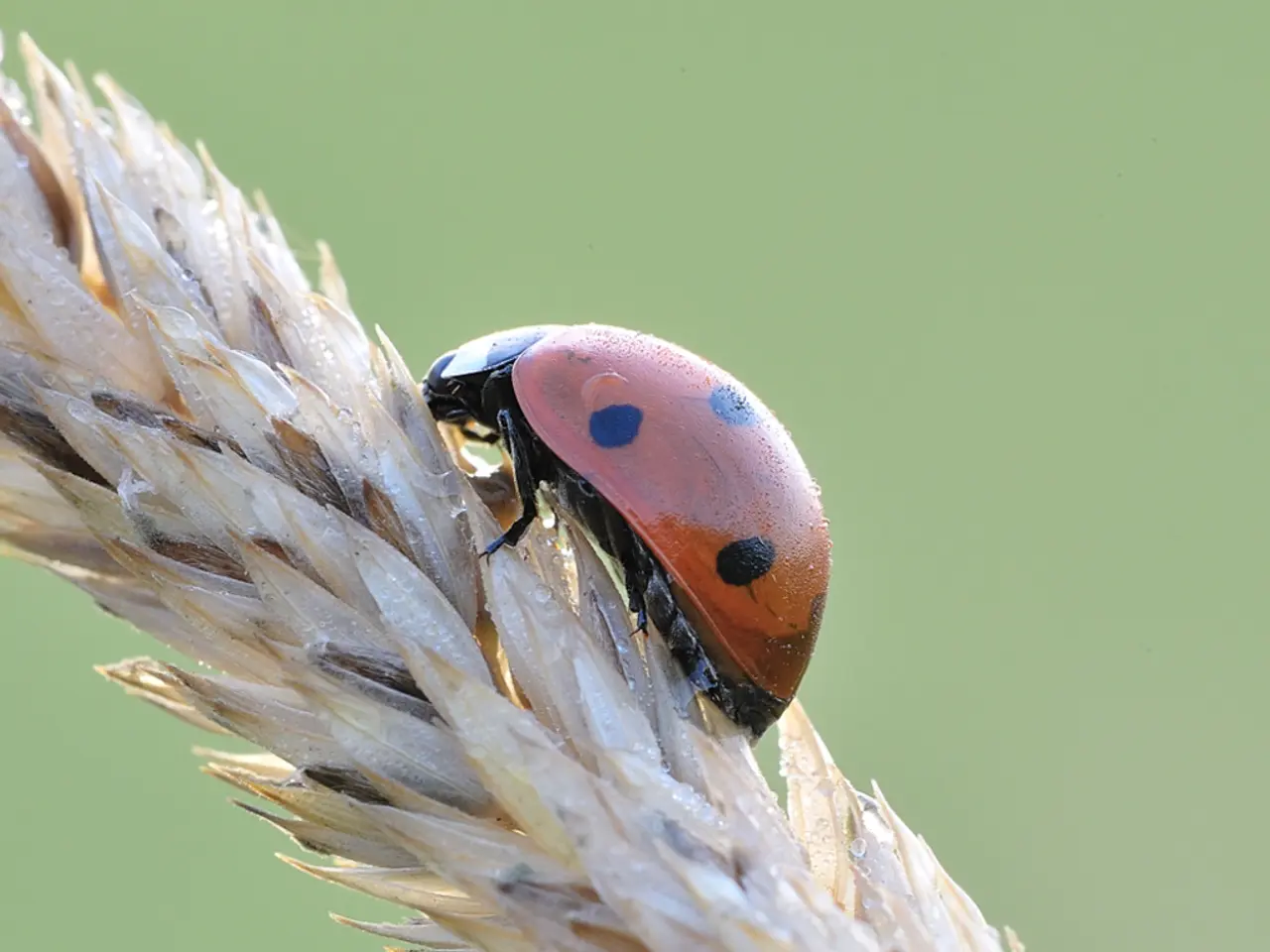
Adult feeding causes superficial damage to grass blades, visible as notches in the blades. Newly emerged adults appear mottled brown, while older adults are shiny black. Monitoring grass clippings is most effective for detecting adults on putting greens, and soap flushing followed by vacuuming is an efficient method for monitoring adult ABW.
Synthetic insecticides, such as organophosphates and pyrethroids, have been primarily used for ABW control, targeting the adult stage. However, pyrethroids have developed resistance in the ABW population, which is associated with a general resistance mechanism of enhanced enzymatic detoxification.
Insecticidal fungi (Beauveria and Metarhizium spp.) provide only moderate control levels against ABW. On the other hand, larvicides may be more viable options for populations with resistance to adulticides, but their efficacy might be compromised in highly resistant populations.
Biological control agents, such as beneficial nematodes Steinernema carpocapsae and Heterorhabditis bacteriophora, may serve as effective alternatives to insecticides for control of insecticide-resistant larvae. Larvae may also be extracted from soil cores using a saline solution or Berlese funnels, but this method is only suitable for assessing larvae, not pupae.
The distribution range of the ABW stretches from the northeastern United States into the Midwest and eastern Canada. It is suspected that the movement of sods may have facilitated the spread of this pest. Plant phenology may be used to indicate ABW developmental stages.
Adults overwinter in grass near tree lines, in leaf litter, moss, high-cut grass, and pine litter. In the first generation, typically causing the most severe damage in annual bluegrass, larvae develop through five instars before pupation. After hatching, the larvae develop through these instars before pupation and eventually transform into adults to repeat the life cycle.
The first cases of the annual bluegrass webworm (Blaugras-Schabe) in Ohio were reported in the 1970s, and since then, the pest has become a significant concern for turfgrass management. Understanding the life cycle and behaviour of the ABW is crucial for effective management and control strategies.